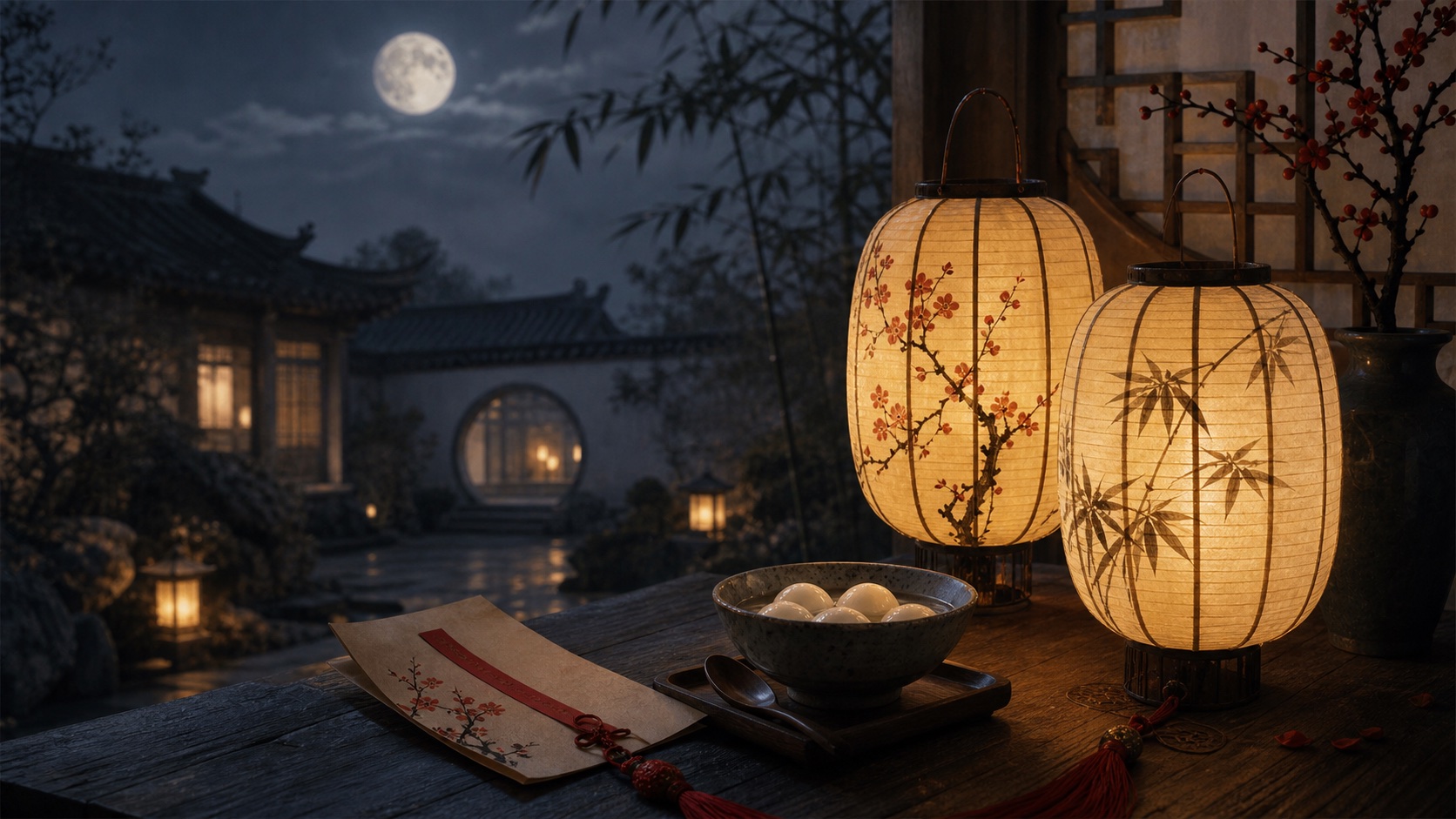
The Lantern Festival (元宵节, Yuánxiāo Jié) falls on the fifteenth day of the first month in the traditional Chinese calendar. It is the first full-moon night of the lunar year and the closing celebration of the Spring Festival season.
Across regions and communities, people view lanterns, solve riddles, eat glutinous rice balls, watch performances, and spend time with family. Contemporary Feng Shui can add a layer of symbolic reflection, but the documented customs are already rich without invented rules.
What does the Lantern Festival celebrate?
The Chinese word yuan can refer to the first lunar month, while xiao means night. The festival developed over centuries, and there is no single origin story accepted for every custom. Public lantern displays were established by imperial China and flourished during later dynasties; lantern riddles became especially prominent from the Song period onward.
Today, the festival commonly represents reunion, brightness, hope, and the joyful conclusion of Lunar New Year.
Lanterns: light, color, and public celebration
Lanterns are the festival’s most visible symbol. They range from small handheld designs to enormous illuminated animals, flowers, dragons, and architectural scenes.
Red is common because it is associated with celebration and auspicious wishes. In a Five Phase reading, illumination also expresses Fire—visibility, warmth, and activity.
If you hang lanterns at home:
- keep doorways and emergency exits clear;
- use flame-free lights unless the lantern is designed for a candle and constantly supervised;
- hang paired lanterns when you want symmetry, not because a single lantern is automatically unlucky;
- reuse a well-cared-for lantern rather than treating a disposable purchase as spiritually necessary;
- choose motifs you understand and can explain.
Lantern riddles
Lantern riddles turn the display into a social and intellectual game. A riddle is written on a slip attached to a lantern, and visitors try to solve it. Traditional topics include characters, idioms, poetry, objects, and historical references.
For a home celebration, write short riddles in both Chinese and English. This makes the activity welcoming to guests who are learning about the festival rather than reducing it to decoration.
Tangyuan and yuanxiao
Sweet or savory glutinous rice balls are the festival’s signature food. Tangyuan are typically formed around a filling; yuanxiao, more common in northern China, are often rolled in layers of flour. Regional methods and names vary.
Their round shape and the sound of tangyuan echo tuanyuan (团圆), “reunion.” Common fillings include black sesame, peanut, red bean, nuts, rose, and jujube.
There is no universal rule requiring men and women to eat different numbers. Serve a quantity appropriate for each person and follow allergy, nutrition, and food-safety needs.
Walking, gathering, and the night outdoors
Some regional traditions include evening walks, crossing bridges, dragon and lion dances, or other public performances. Historically, the festival also offered a rare occasion for people to socialize in brightly lit public spaces after dark.
A modern celebration can be as simple as visiting a local lantern event, taking an evening walk with friends, or noticing the first full moon of the lunar year. This is a cultural and reflective practice, not a treatment for illness.
A thoughtful Feng Shui interpretation
Feng Shui readers can approach the festival through three themes:
- Light: illuminate an entrance or forgotten corner to make the home feel welcoming.
- Completion: finish one small task left over from the New Year reset.
- Reunion: arrange seating and food so people can gather comfortably.
You might place a lantern near the entrance, bring fresh flowers to the table, or use a round tray to echo the full moon and the symbolism of togetherness. None of these actions guarantees luck; their value lies in attention and shared meaning.
Common taboos: custom, not universal law
Online lists may forbid hair washing, lending money, wearing black, breaking objects, or arguing. Such ideas differ by family and region, and many people do not follow them.
If you are a guest, ask your host what matters in their household. Kind speech, safe celebrations, and respect for food and family are more meaningful than fear of accidentally breaking a rule.
How to celebrate at home
- Make or buy tangyuan or yuanxiao from a trusted source.
- Create a safe lantern display.
- Write riddles for guests.
- Learn the Chinese names and their pronunciation.
- Share one family or regional story about the festival.
- End with a walk or a quiet view of the moon.
The Lantern Festival closes the wider New Year season. To understand an earlier prosperity strand without turning it into one universal timetable, read Caishen and Lunar New Year traditions.
The Lantern Festival is compelling because it joins public spectacle with intimate reunion. Its mystery comes from centuries of accumulated meaning—not from threatening people with bad luck.
Further reading
- Lantern Festival: Key Dates and Customs, Shanghai Municipal People’s Government
- Lunar New Year Celebration, Smithsonian National Museum of Asian Art