Wisdom & Practice
The FengShuiZen Journal
Source-aware guides to Feng Shui, the Five Elements, Pixiu, festivals, materials, and living cultural traditions.
How to Find Your Chinese Birth Hour (Shichen)
Convert a recorded birth time into one of the 12 Chinese shichen, while checking time zones, daylight saving, uncertain records, exact boundaries, and what a lunar-date converter does not calculate.
Read MoreEarly Zi and Late Zi Hour: When Does the BaZi Day Change?
Understand why Zi hour crosses midnight, how 23:00 and 00:00 day-boundary methods can produce different day and hour pillars, and what a calculator should disclose.
Read MoreWhat Is the BaZi Hour Pillar? Stem, Branch, and Birth-Time Data
Understand the two characters in a BaZi hour pillar, how the birth-time branch and day stem work together, and which time and calendar choices a calculator must disclose.
Read More
Chinese Zodiac Birth Hour vs Year Animal: What's the Difference?
Compare your familiar birth-year animal with the zodiac animal attached to your two-hour birth period, and see where both fit within the complete Four Pillars structure.
Read MoreShichen in Wuxia, Chinese Dramas, and Games: A Translation Guide
Translate shichen, branch hours, ke, geng, and dian without false precision, using a practical cheat sheet for novels, subtitles, historical fantasy, and games.
Read MoreA Day in Ancient China Through the Twelve Shichen
Walk through a source-bounded composite day from midnight to settled night, using traditional day-part names while keeping season, occupation, place, and status visible.
Read More
Geng at Sea: How Chinese Navigators Measured Sailing Time
Learn how late-imperial Chinese sailing manuals combined compass directions with geng, why ten geng could represent a full day at sea, and why this unit differs from an urban night watch.
Read MoreWas Wushi Sanke Really Execution Time? History vs Fiction
Learn what wushi sanke means, why it became the famous 'noon, three quarters' execution time, and why literary convention should not be mistaken for a universal law.
Read MoreHow Ancient Chinese Cities Announced the Time
Follow time from a water clock or official schedule to placards, drums, bells, cymbals, and watch calls—and see why public time was an institution, not just a device.
Read More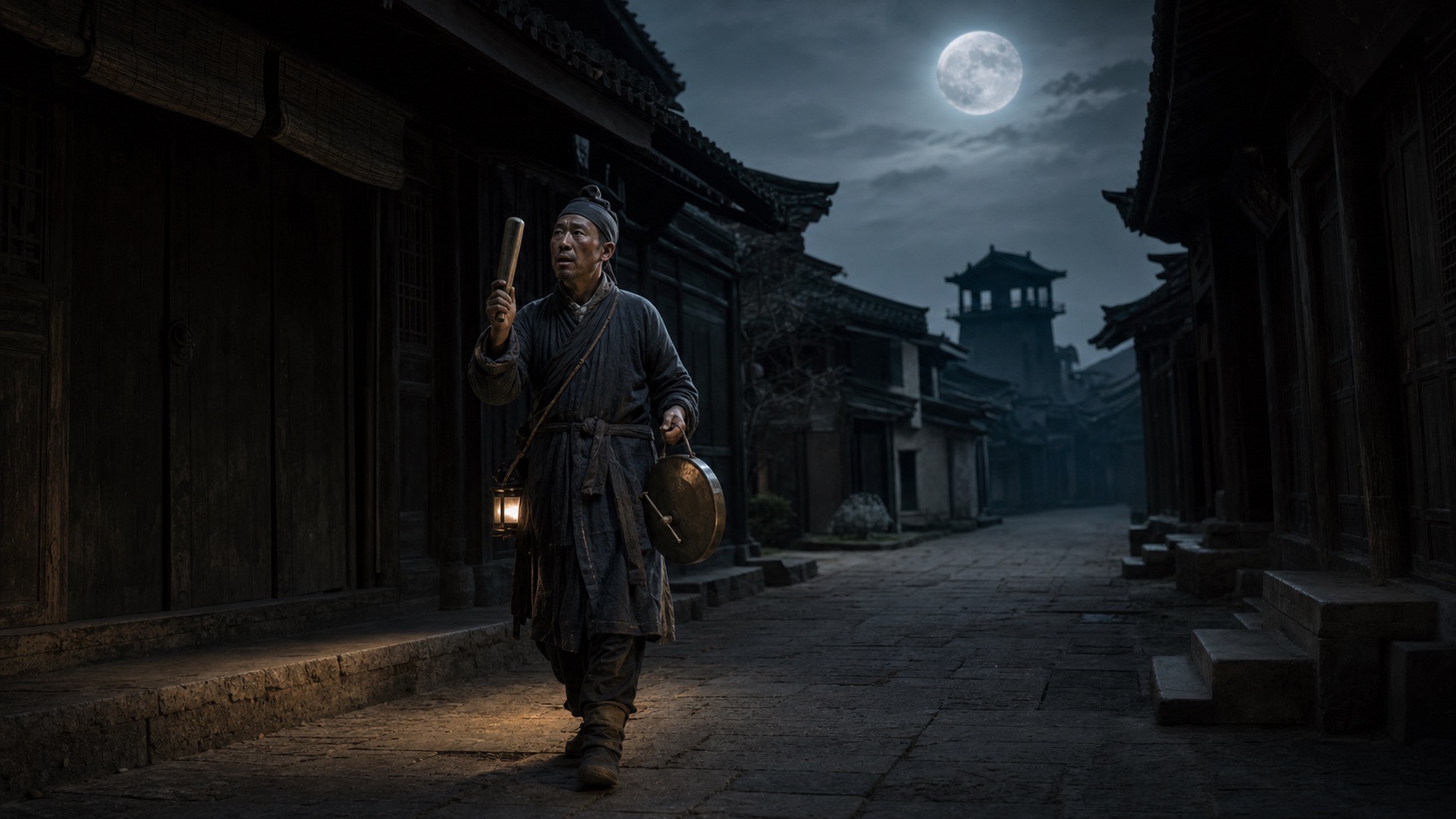
Night Watchmen in Ancient China: The Workers Who Made Time Public
Meet the gengfu who carried nighttime signals through streets and compounds, and learn why keeping time required labor, sound, authority, and local knowledge.
Read MoreChinese Night Watches: Why the Five Watches Changed with the Seasons
Learn how a night could be divided into five watches, why those watches were not always fixed two-hour blocks, and what a Qing watch clock reveals about seasonal time.
Read MoreWhen Chinese and European Clocks Met: Timekeeping in the Ming-Qing Court
Trace how European mechanical clocks entered late Ming and Qing China, how court workshops and regional makers adapted them, and how Chinese watch systems met hour-and-minute displays.
Read More