Name the context
Separate documented history, living custom, modern interpretation, and our own reflective exercises.
Hours, Instruments & Public Time
Follow the twelve shichen through water clocks, incense clocks, astronomy, city signals, night watches, navigation, and modern conversion questions.
Explore by topic
A grounded approach
Separate documented history, living custom, modern interpretation, and our own reflective exercises.
Use natural English while keeping Chinese terms and their cultural setting visible.
Present symbolic or traditional frameworks as such, and describe measurable conditions separately.
Selected reading
Guide 01
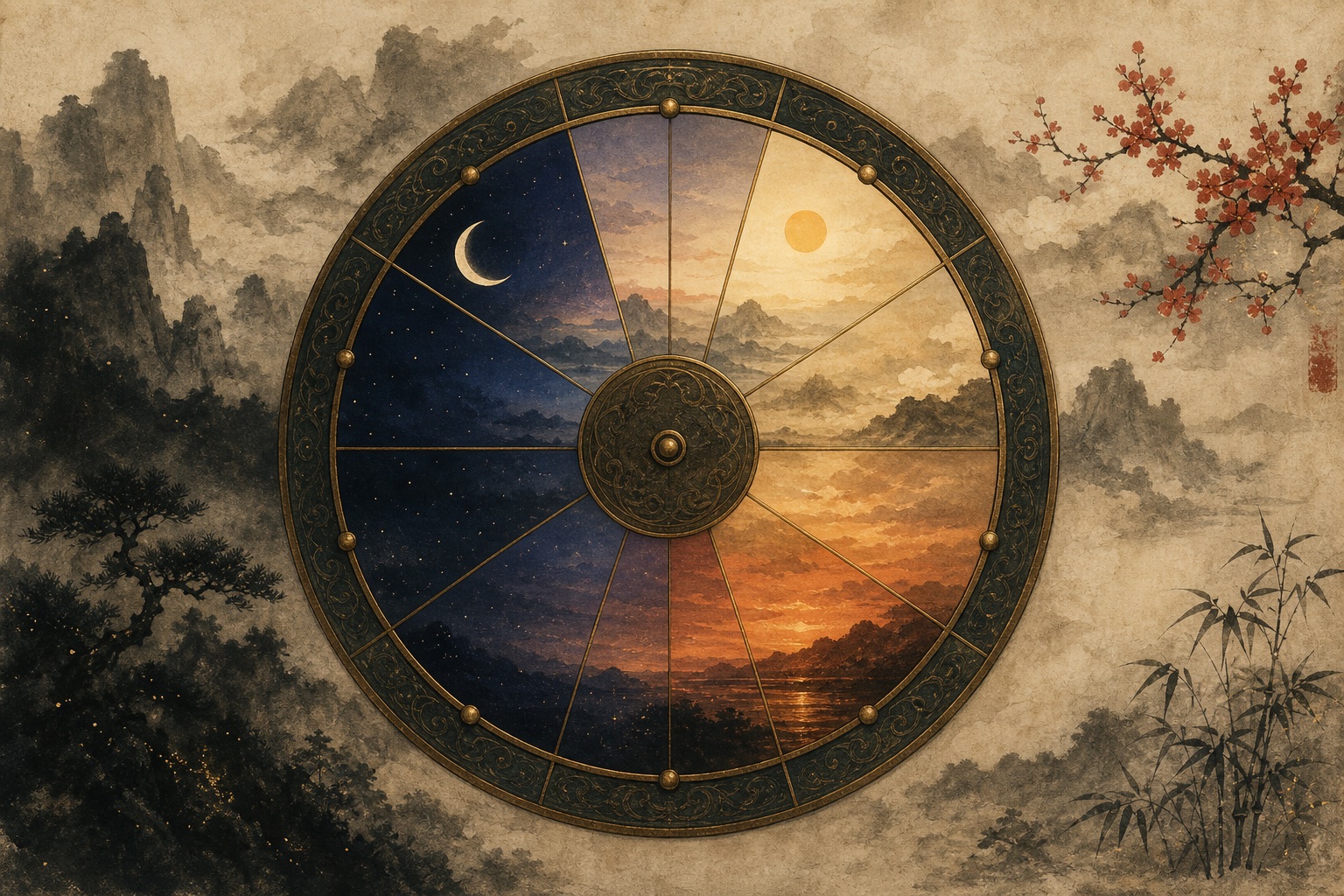
Use the complete 12-shichen chart, then explore how traditional Chinese hours connect Earthly Branches, day-part names, timekeeping devices, literature, and birth-time systems.
Read the guideGuide 02
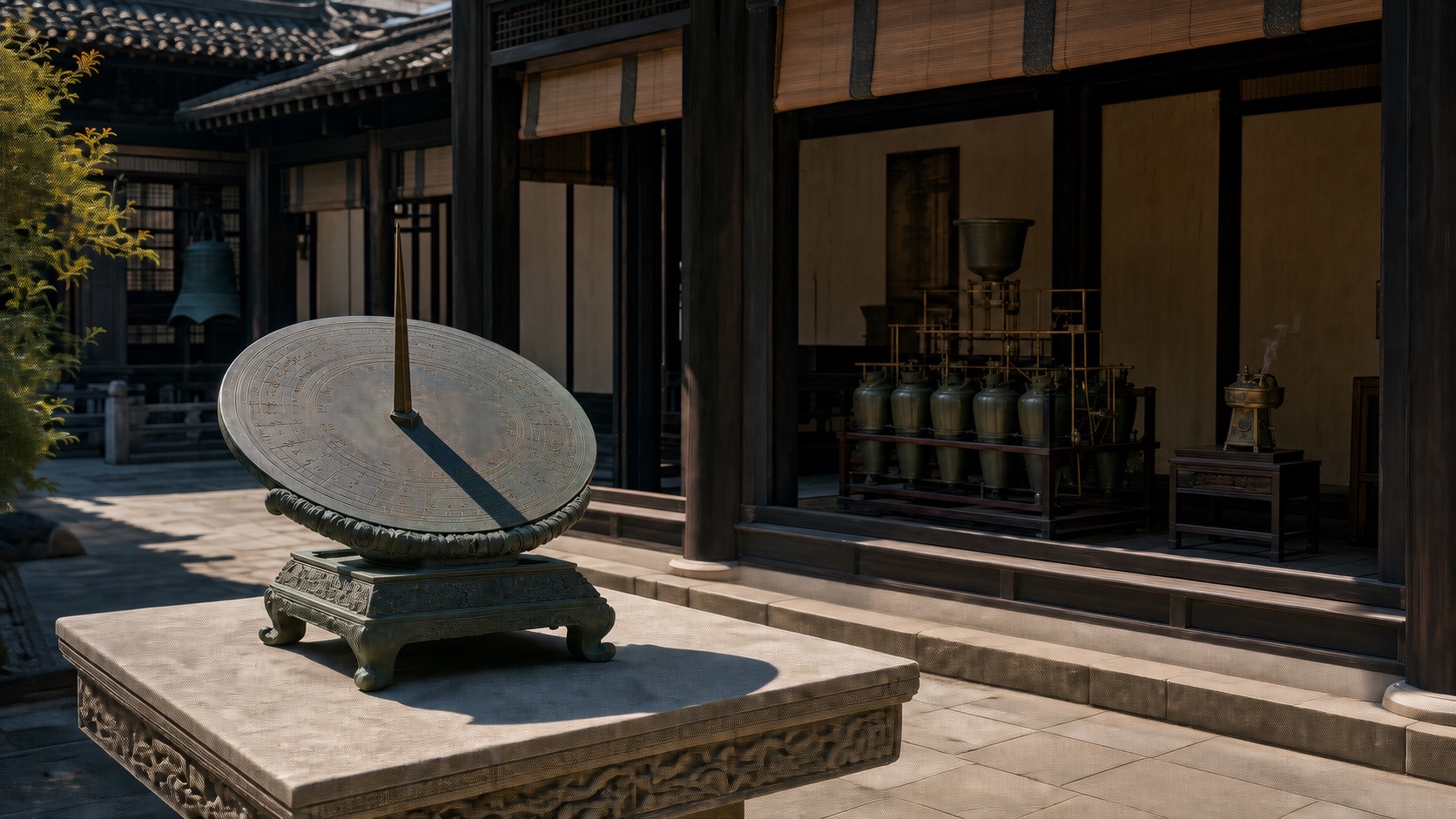
Compare the main ways time was observed, measured, displayed, and announced in imperial China—from sunlight and flowing water to incense, clock towers, drums, and bells.
Read the guideGuide 03
Use a cautious conversion guide for shichen, ke, night watches, and watch beats—and learn why the dynasty, instrument, season, and context can change the answer.
Read the guideGuide 04
Learn how Chinese water clocks used regulated flow, vessels, floats, indicator rods, scales, and trained timekeepers—and why pressure, temperature, and calibration mattered.
Read the guideGuide 05
Learn how incense clocks used calibrated powder paths, seals, trays, tampers, and pierced covers to mark duration—and what surviving museum objects can and cannot prove.
Read the guideGuide 06
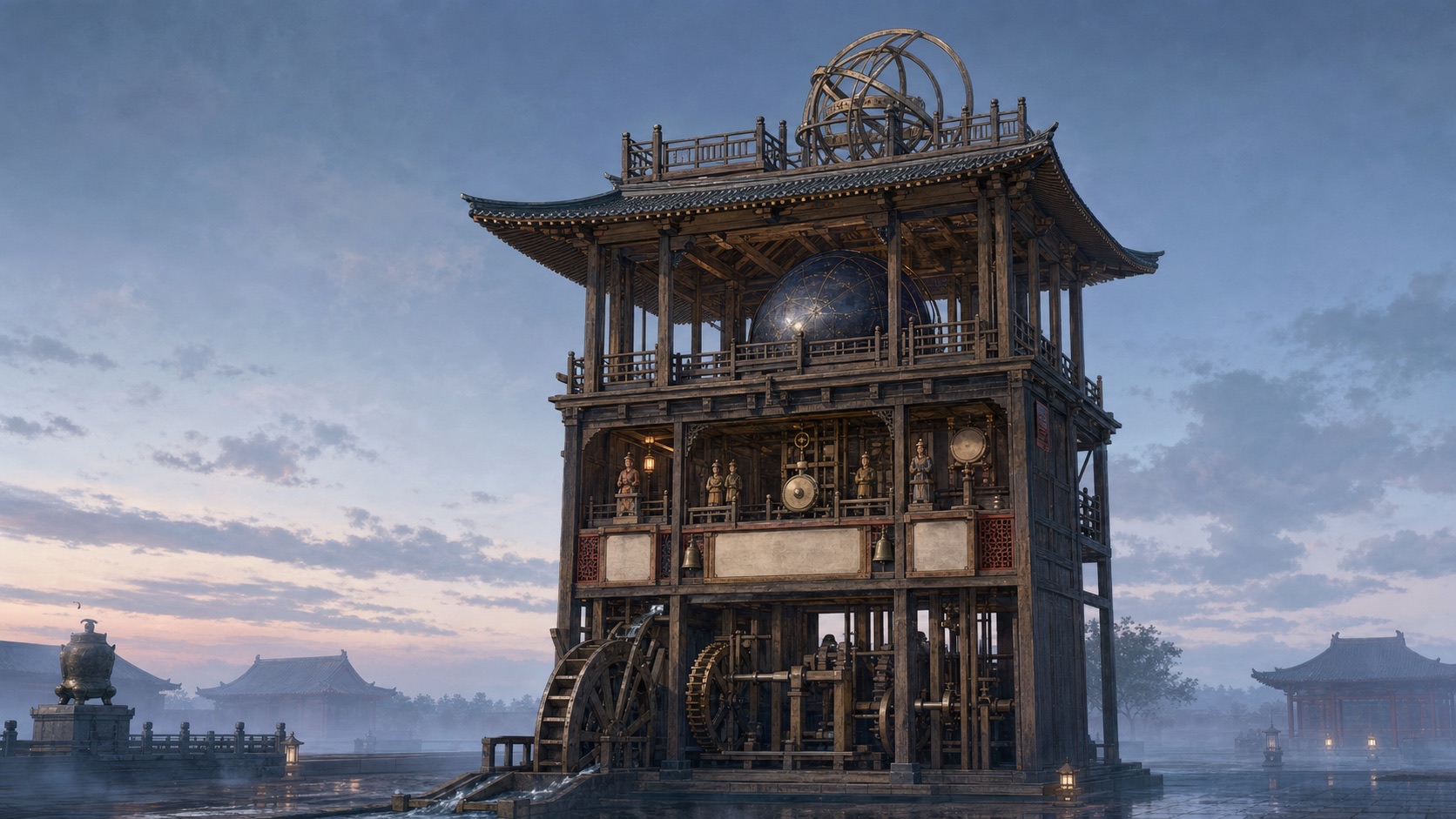
Explore how Su Song's 12-meter water-powered tower combined an armillary sphere, celestial globe, hydropower, gearing, time displays, bells, gongs, drums, and night reporting.
Read the guideGuide 07
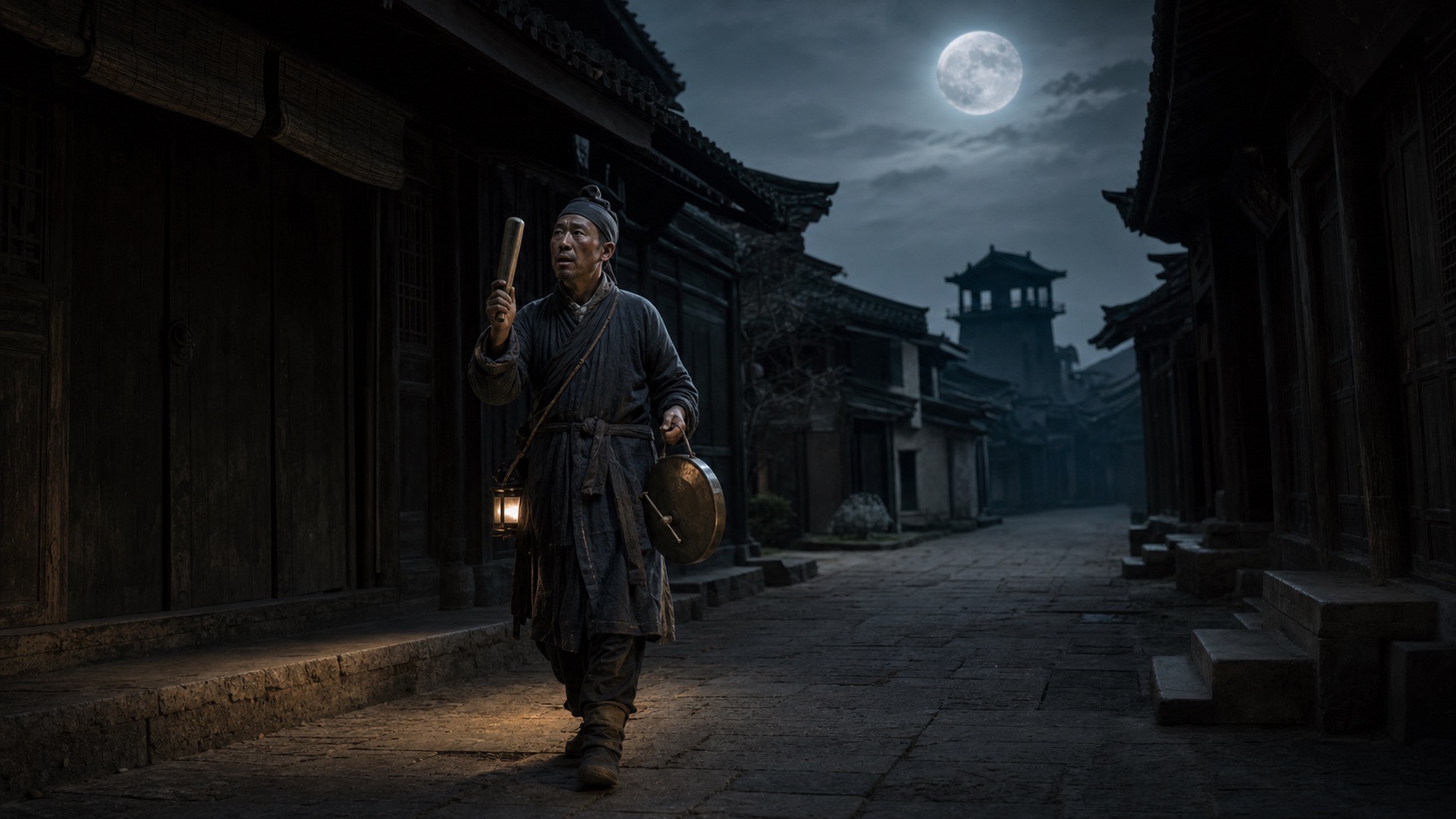
Meet the gengfu who carried nighttime signals through streets and compounds, and learn why keeping time required labor, sound, authority, and local knowledge.
Read the guideGuide 08
Walk through a source-bounded composite day from midnight to settled night, using traditional day-part names while keeping season, occupation, place, and status visible.
Read the guide