Wisdom & Practice
The FengShuiZen Journal
Source-aware guides to Feng Shui, the Five Elements, Pixiu, festivals, materials, and living cultural traditions.
Incense Clocks: How East Asian Timekeepers Measured a Burning Trail
Learn how incense clocks used calibrated powder paths, seals, trays, tampers, and pierced covers to mark duration—and what surviving museum objects can and cannot prove.
Read MoreChinese Water Clocks: How Clepsydras Measured Time
Learn how Chinese water clocks used regulated flow, vessels, floats, indicator rods, scales, and trained timekeepers—and why pressure, temperature, and calibration mattered.
Read More
Su Song's Clock Tower: The Water-Powered Observatory of Song China
Explore how Su Song's 12-meter water-powered tower combined an armillary sphere, celestial globe, hydropower, gearing, time displays, bells, gongs, drums, and night reporting.
Read More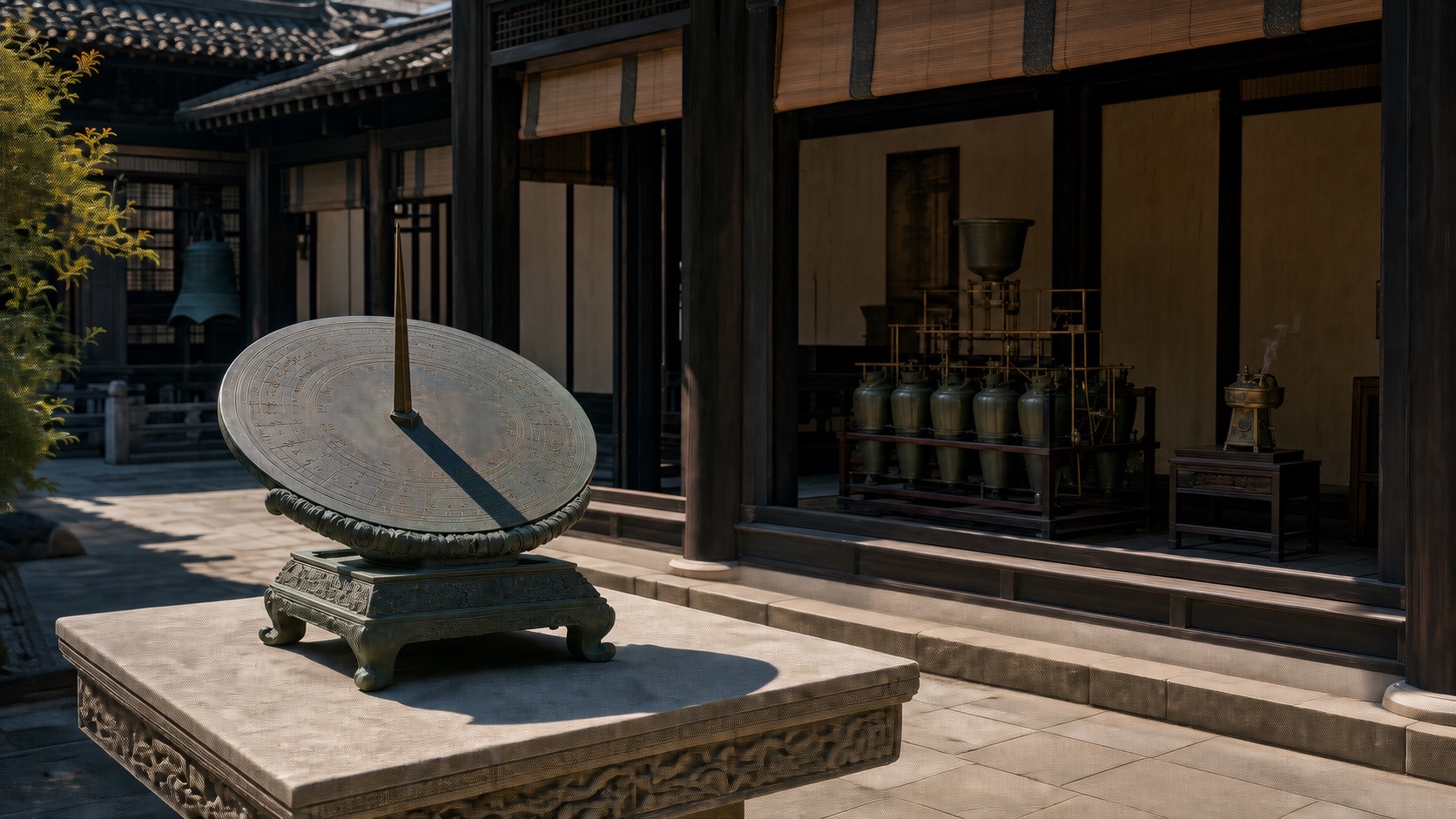
How Ancient China Told Time: Sundials, Water Clocks, Incense, and Bells
Compare the main ways time was observed, measured, displayed, and announced in imperial China—from sunlight and flowing water to incense, clock towers, drums, and bells.
Read MoreHow to Convert Ancient Chinese Time: Shi, Ke, Geng, and Dian
Use a cautious conversion guide for shichen, ke, night watches, and watch beats—and learn why the dynasty, instrument, season, and context can change the answer.
Read MoreTwelve Traditional Chinese Times of Day: From Yeban to Rending
Explore the poetic and practical day-part names paired with the 12 shichen, including midnight, rooster call, dawn, mealtimes, sunset, dusk, and settled night.
Read MoreThe 12 Earthly Branches: Hours, Months, Directions, and Zodiac Animals
Understand the 12 Earthly Branches as a reusable Chinese calendrical sequence connecting shichen, traditional months, zodiac animals, compass directions, and the Four Pillars.
Read MoreWhy Does Zi Hour Start at 11 PM? The Chinese Midnight Hour Explained
Learn why Zi hour runs from 11 p.m. to 1 a.m., how a midnight-centered shichen differs from a modern date boundary, and which convention a birth-time guide should disclose.
Read More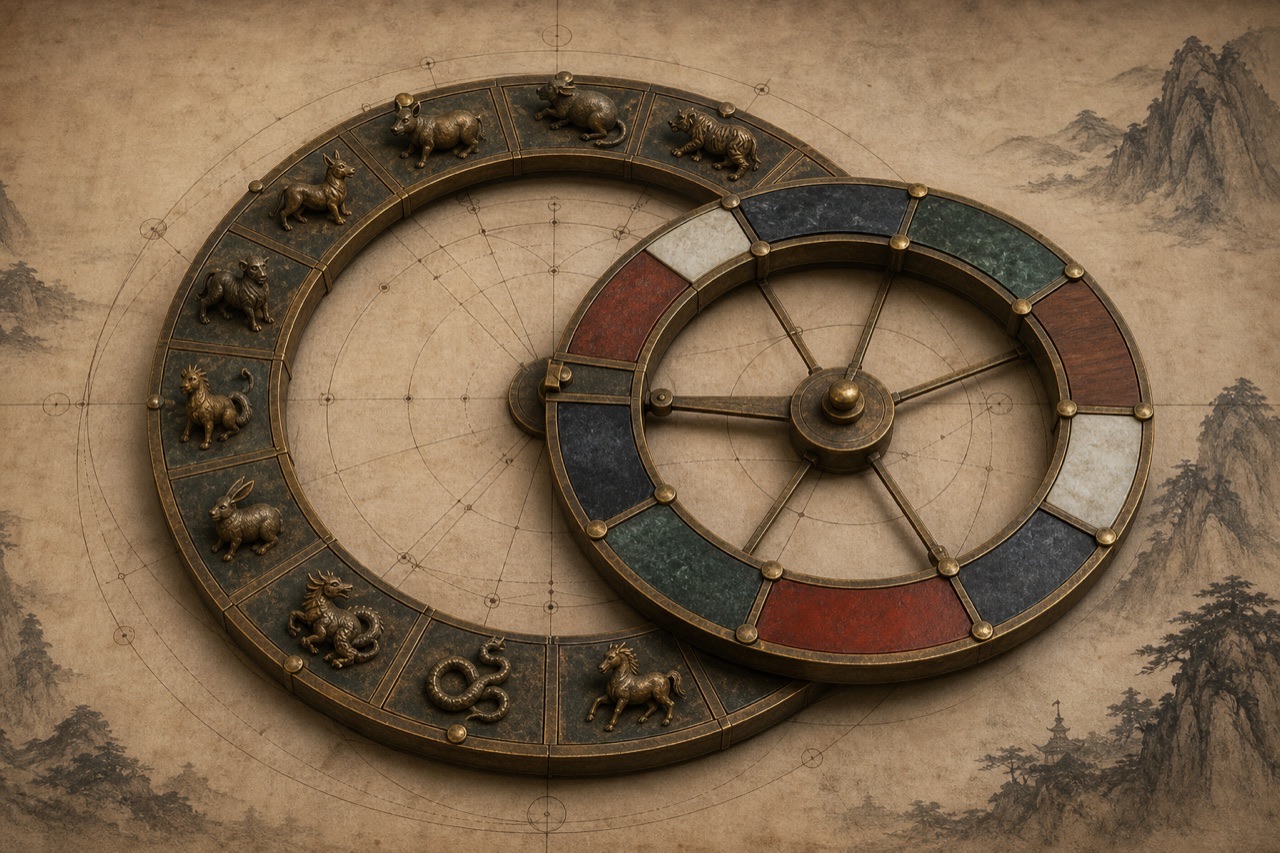
How the Chinese Zodiac Works: Animals and the 60-Year Cycle
Understand how 12 animals, 10 Heavenly Stems, Five Phases, yin and yang, and the lunisolar calendar combine into a 60-year Chinese zodiac cycle.
Read More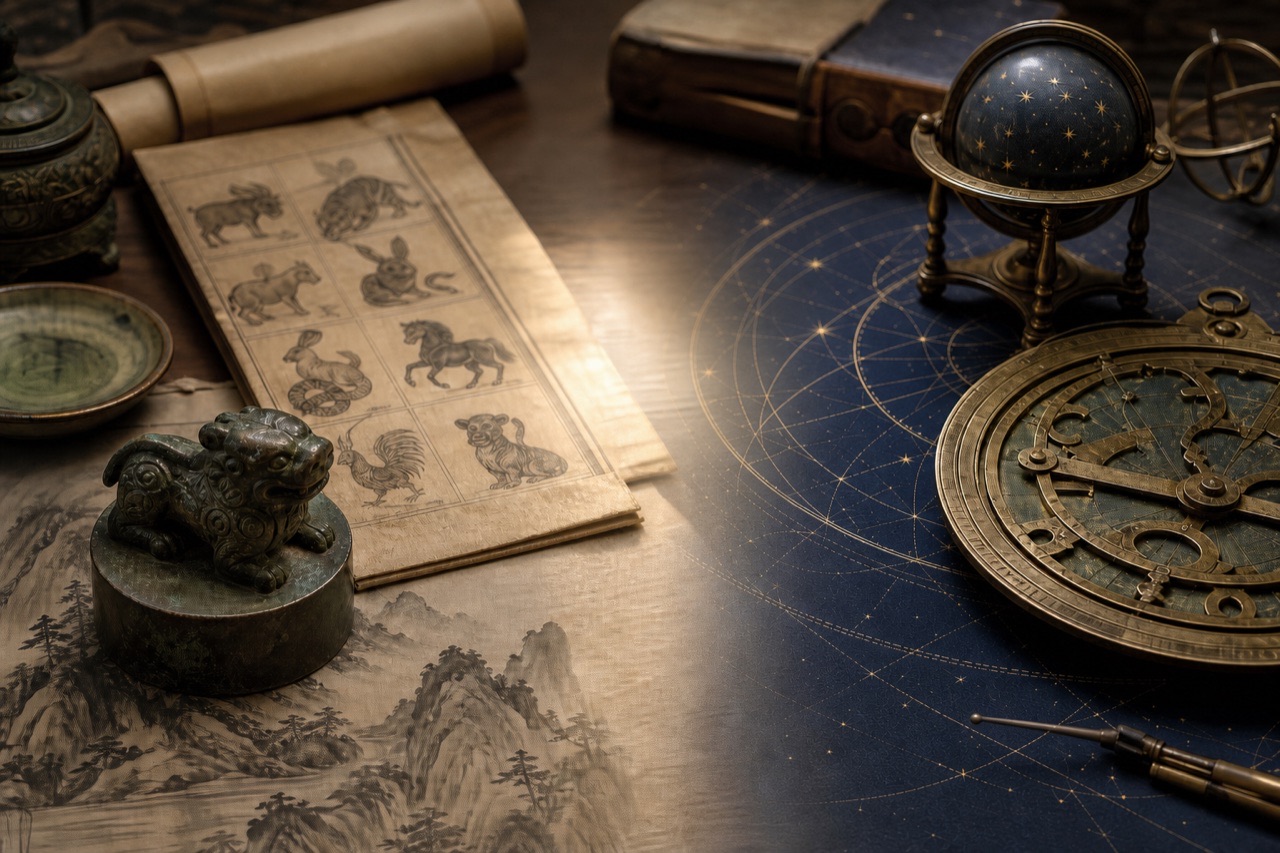
Chinese Zodiac vs. Western Zodiac: Years, Dates, and Elements
Compare Chinese and Western zodiac systems by birth-date method, calendar, symbols, elements, cycles, and cultural context.
Read More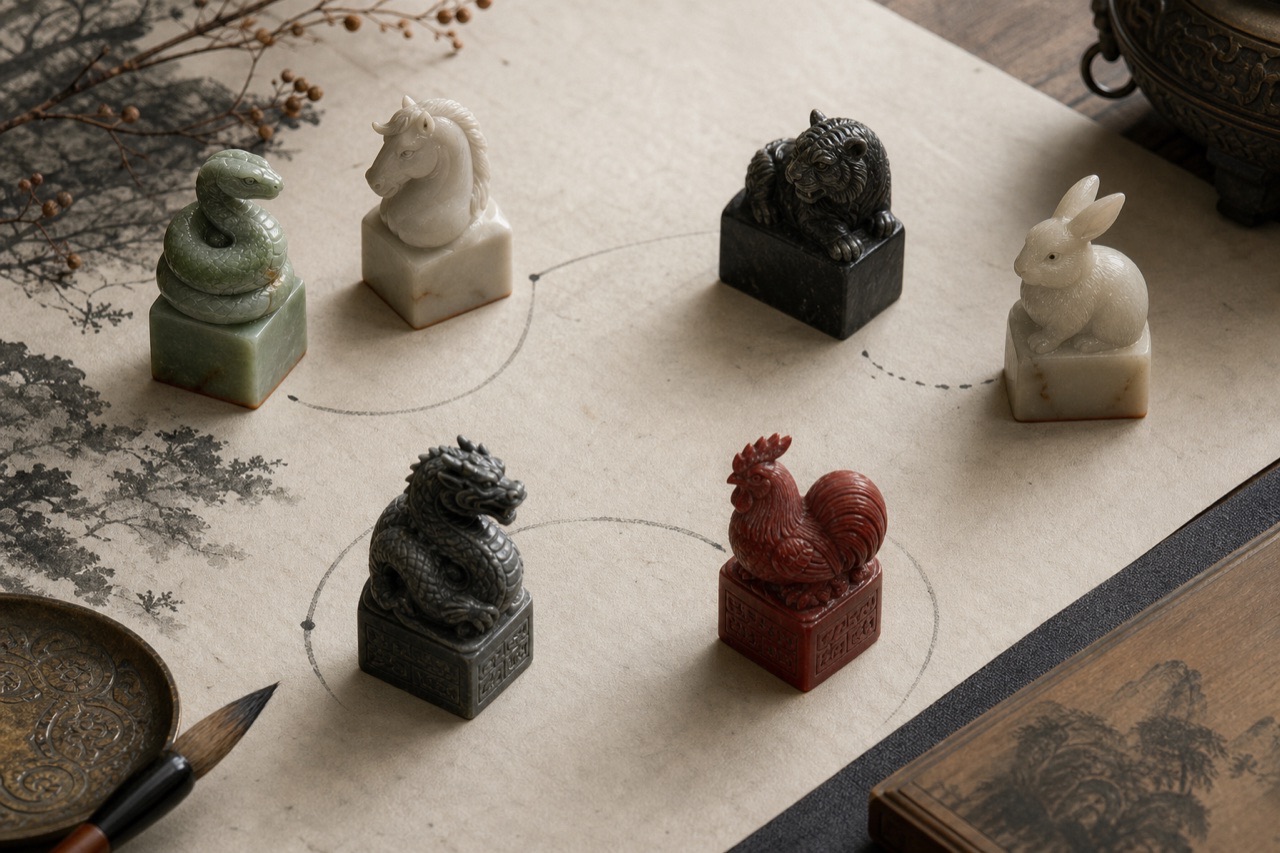
Chinese Zodiac Compatibility: Traditional Pairings Without Fatalism
Explore traditional Chinese zodiac compatibility pairs, trios, and clashes—then learn why a birth-year animal should never decide a relationship.
Read More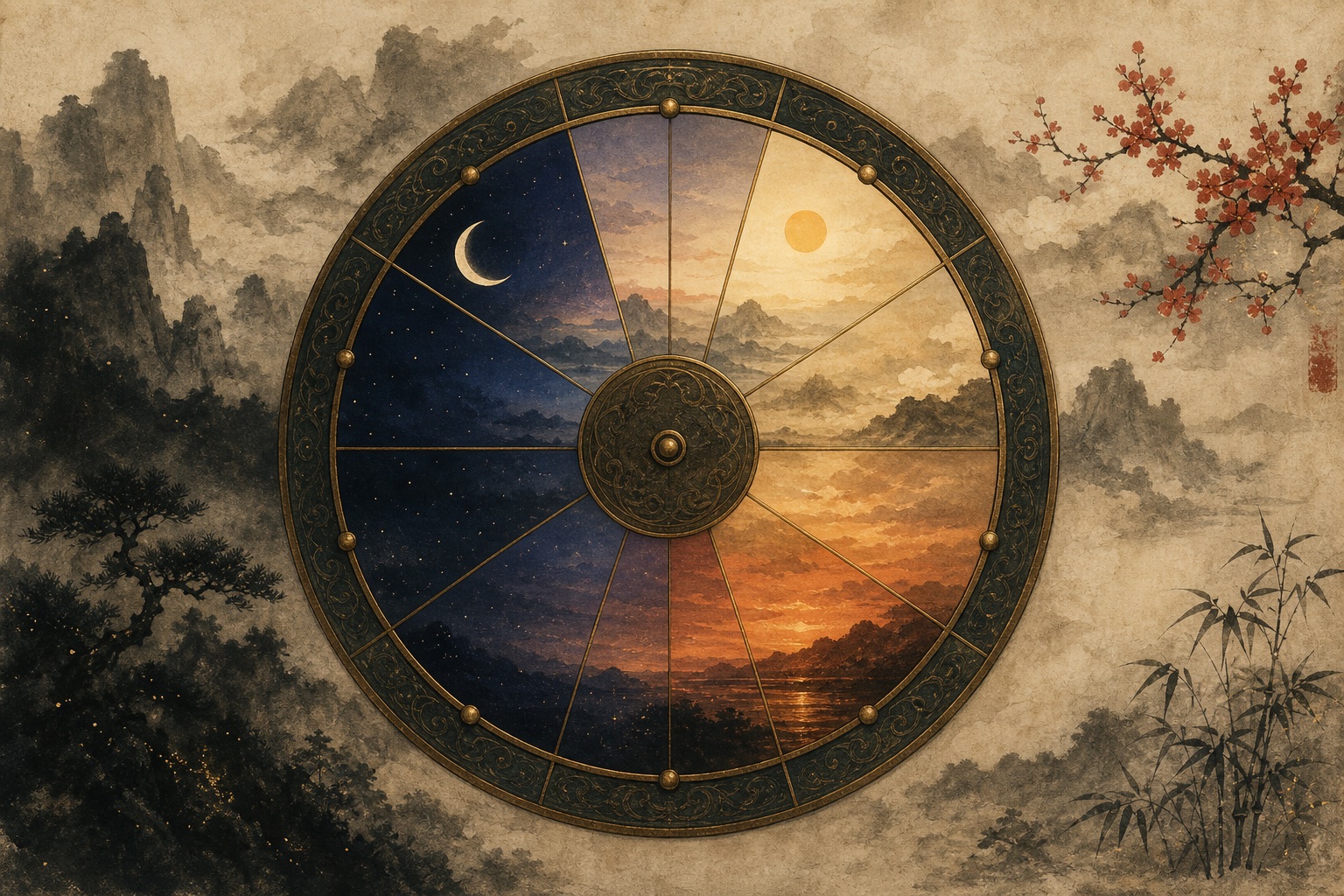
The 12 Shichen: A Complete Guide to Traditional Chinese Hours
Use the complete 12-shichen chart, then explore how traditional Chinese hours connect Earthly Branches, day-part names, timekeeping devices, literature, and birth-time systems.
Read More